Here is everything that happened at your studio today, without you.
A sub found at six in the morning, a teacher training deposit taken at ten, and a lapsed membership won back before lunch. You taught. Recess did the rest.
100% free to use, no hidden fees. Members pay about 5% at checkout.
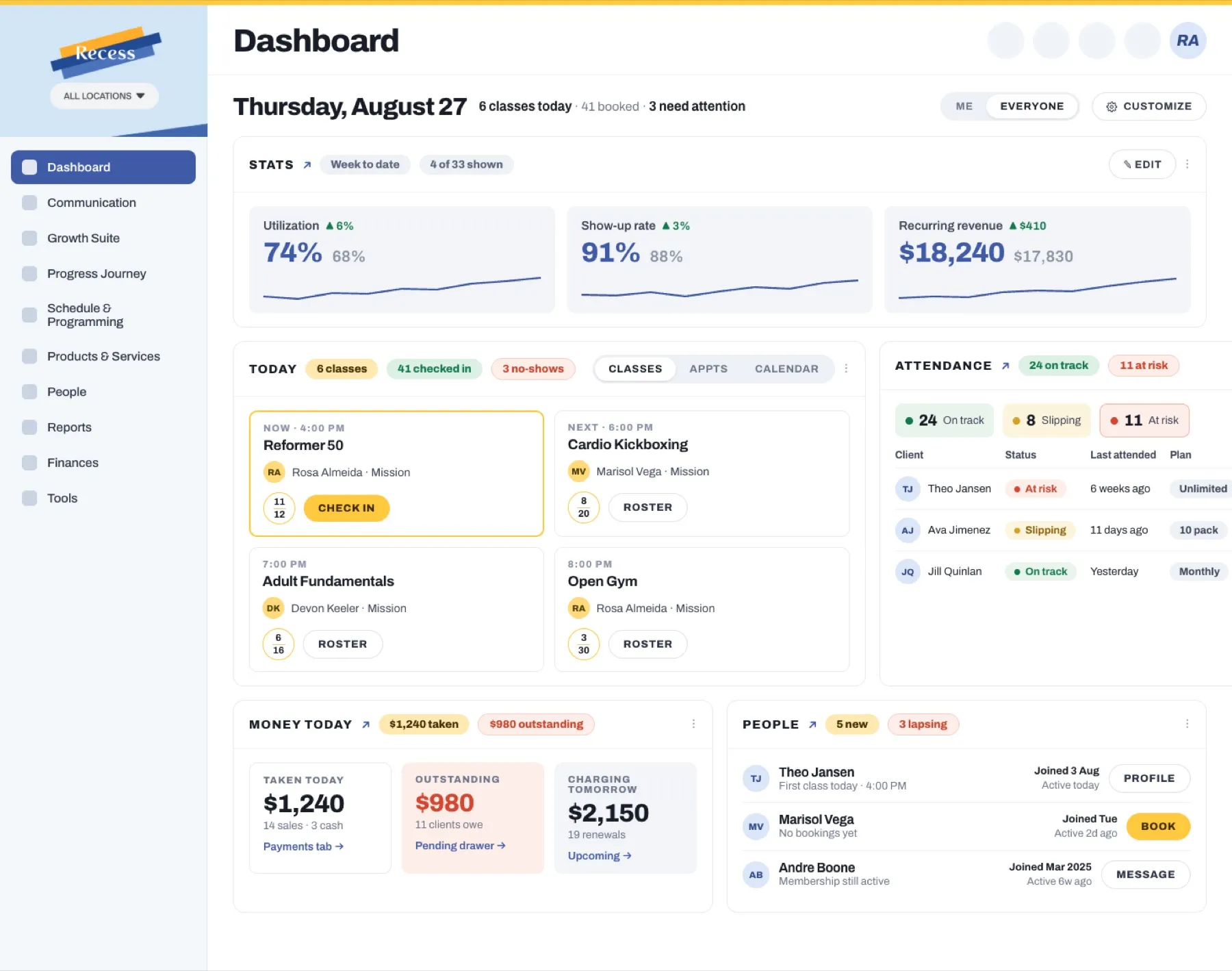
Your 6:15 teacher woke up with no voice.
She texts you the way she always does, too late to be useful and too early to call anyone. In most studios this is the moment the owner starts driving in.
Recess texts every teacher on your roster who is cleared to teach that class, takes the first yes, and updates the schedule, the class page and the students' app before the first mat goes down. Nobody arrives at a dark room, and you did not wake up to solve it.
The sub's name is on the class, which means her pay for it is already correct, because pay follows the class rather than the original assignment.
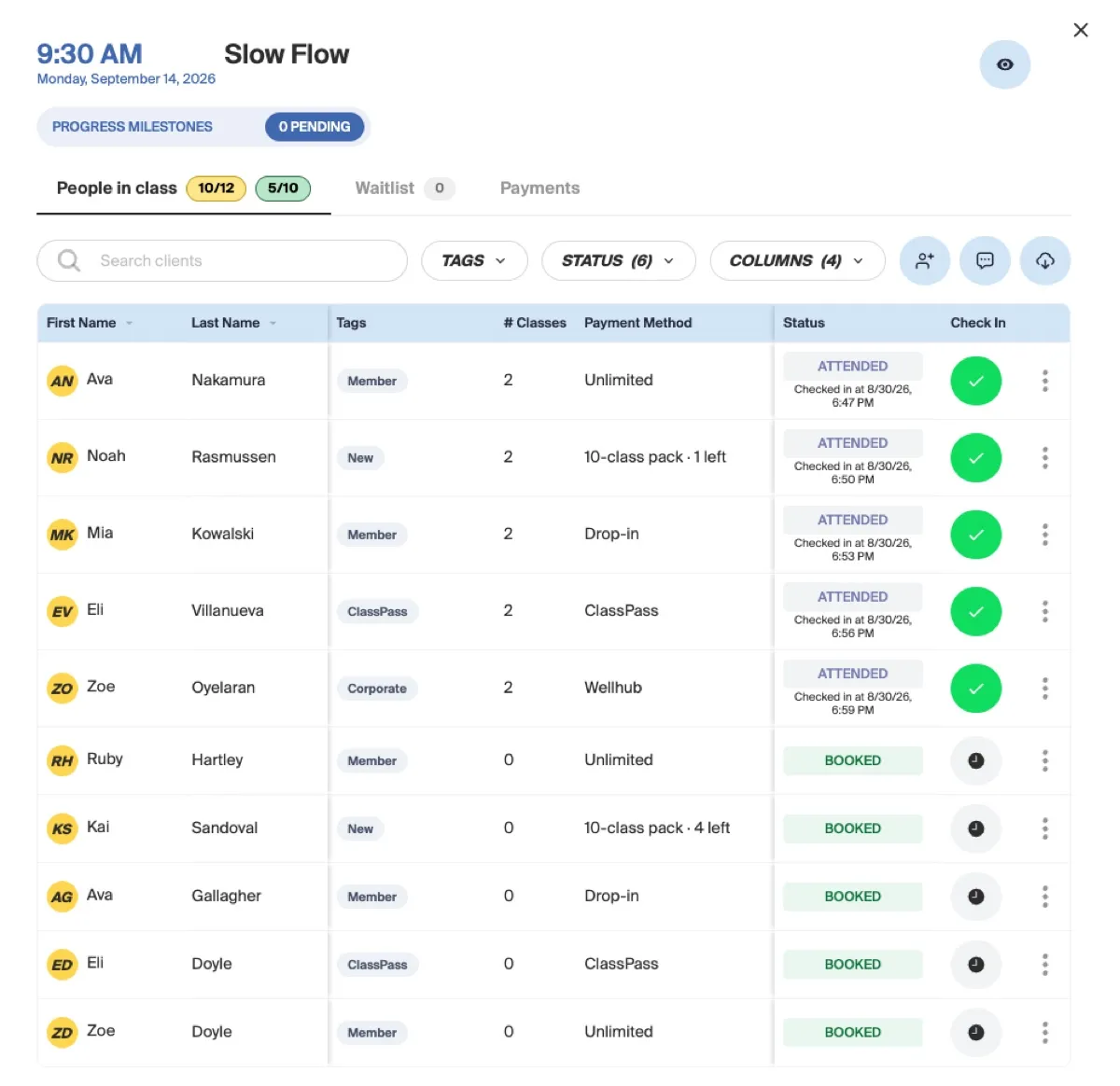
Three people paid three different ways for the same class.
The 9:30 slow flow filled with a member on unlimited, a student spending the last credit of a ten class pack, a drop in who found you last night, someone arriving through ClassPass and someone else through Wellhub. That is a normal yoga class, and it is more billing variety than most software expects.
Recess handles all five in the same room, on one roster, without any of it reaching your desk. Every booking source sits in the same list, and you check people in from the same screen. The pack holder is told, at booking, that this was her last credit, and can buy the next pack in two taps before she takes her shoes off.
Packs carry your own rules: how many classes, how long they last, which classes they are good for, and whether they auto renew. Expiry is enforced quietly and consistently, which is far kinder than a front desk making a judgment call in front of a line.
Someone enrolled in your 200 hour training.
Teacher training is often the largest single line in a yoga studio's year, and it is usually run outside the software entirely: a Google Form, a spreadsheet, a Venmo request, and a folder of signed PDFs.
In Recess a training is a program, not a class. It has a start date and an end date, a cohort with a capacity, a price, a deposit, and a payment plan that bills the balance on the schedule you set. The trainee signs your training agreement and your liability waiver as part of enrolling rather than three weeks later.
Her weekend module dates sit on her calendar in your app, her attendance is tracked against the hours she has to complete, and her payments appear in the same revenue reporting as everything else you sell. When someone drops in month three, you can see exactly what has been paid and what has not.
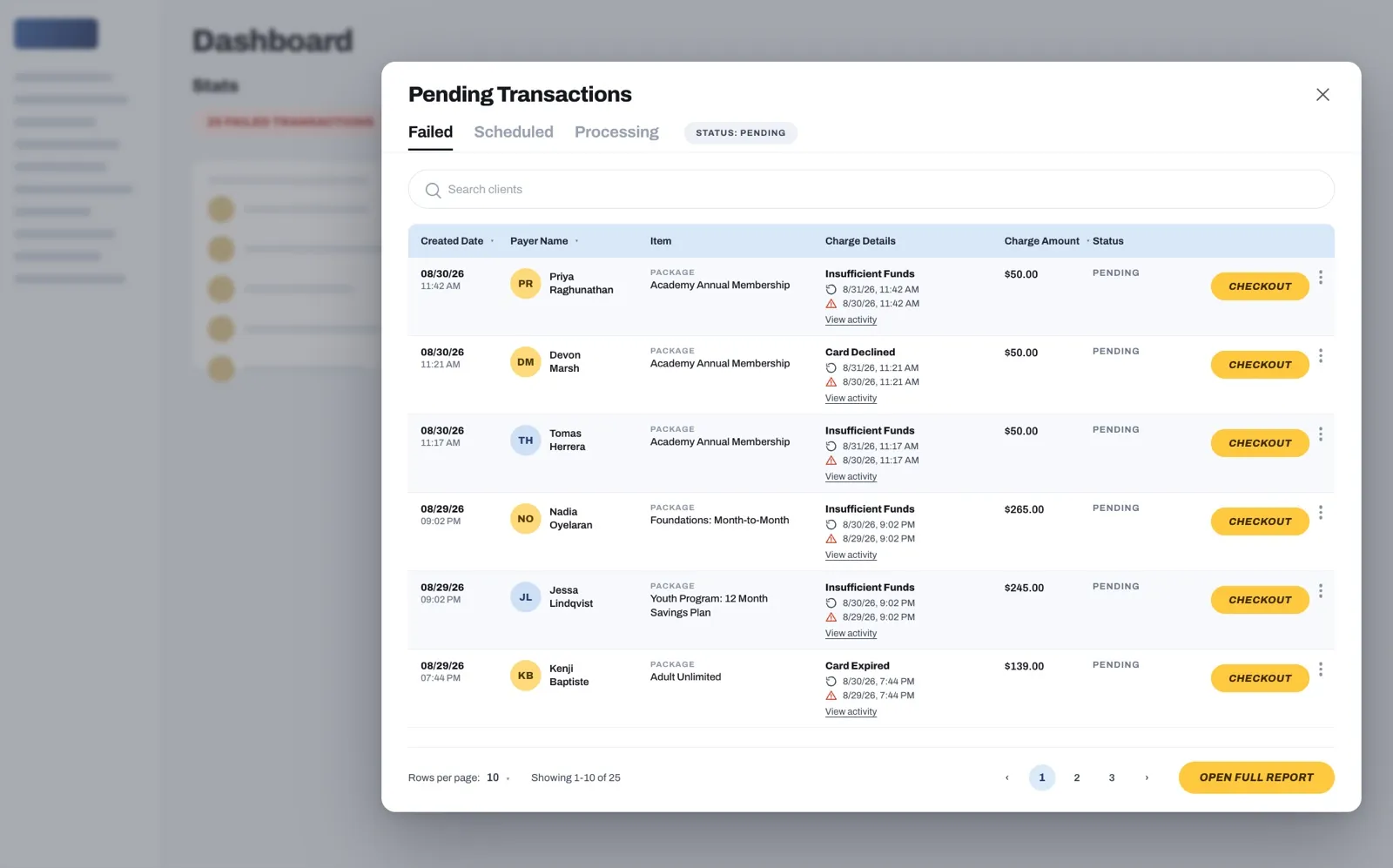
A membership you thought was active had not paid since July.
This is the quiet one. Cards expire. Banks reissue. The member keeps coming for a while, then comes less, then stops, and nobody calls, because on the schedule she still looked like a member. By the time anyone notices it has been two months and she has bought a mat for her living room.
Recess recovers failed payments automatically, retrying on a sensible schedule and asking the member to update her card in your app before a human is involved at all. When a membership does lapse, or when someone who used to come three times a week has not been in for two weeks, an automated sequence reaches out in your studio's voice, by text or by email from your own domain.
Seasonal drift is the same problem wearing a different coat. Attendance swings hard in August and again over the holidays, and the version of that swing you can afford is the one where people pause and come back. Your video library is part of the answer: a member travelling for three weeks still has something for the membership she is paying for.
The winter retreat sold out while you were teaching.
Workshops and retreats are how a lot of yoga studios actually make a margin, and they are the thing most booking tools handle worst. A retreat is not a class. It has a deposit and a balance, a capacity you cannot exceed, a room type, a different waiver, and a date six months out.
Recess runs it as an event with real enrollment. Take a deposit now, bill the balance in October, cap the list, and let the waitlist do its own work when someone withdraws. Saturday workshops run the same way at a smaller scale, priced separately from your membership or included for members if that is your call.
Because it all sits alongside your classes rather than in another tool, a student books the retreat with the card already on file and the waiver already signed, and the revenue lands in your reporting without an export.
The last class ended and the pay run was already built.
Yoga payroll is fiddly in a specific way. Teachers are paid per class, often at different rates, sometimes with a head count component, and the rate frequently depends on which class it was. Then a sub covers a class and the whole calculation shifts under you.
Recess computes it as the day happens. Pay rates are set by teacher and by class type, with head count rules if you use them, and clock in and out is there for front desk and cleaning staff who are paid by the hour.
This morning's sub is on the run for the 6:15 at her rate, not the original teacher's, because the schedule knows who actually taught it. At the end of the pay period you open a run that is already built, check what it has flagged, and approve it.

Your studio's name on the App Store, not ours.
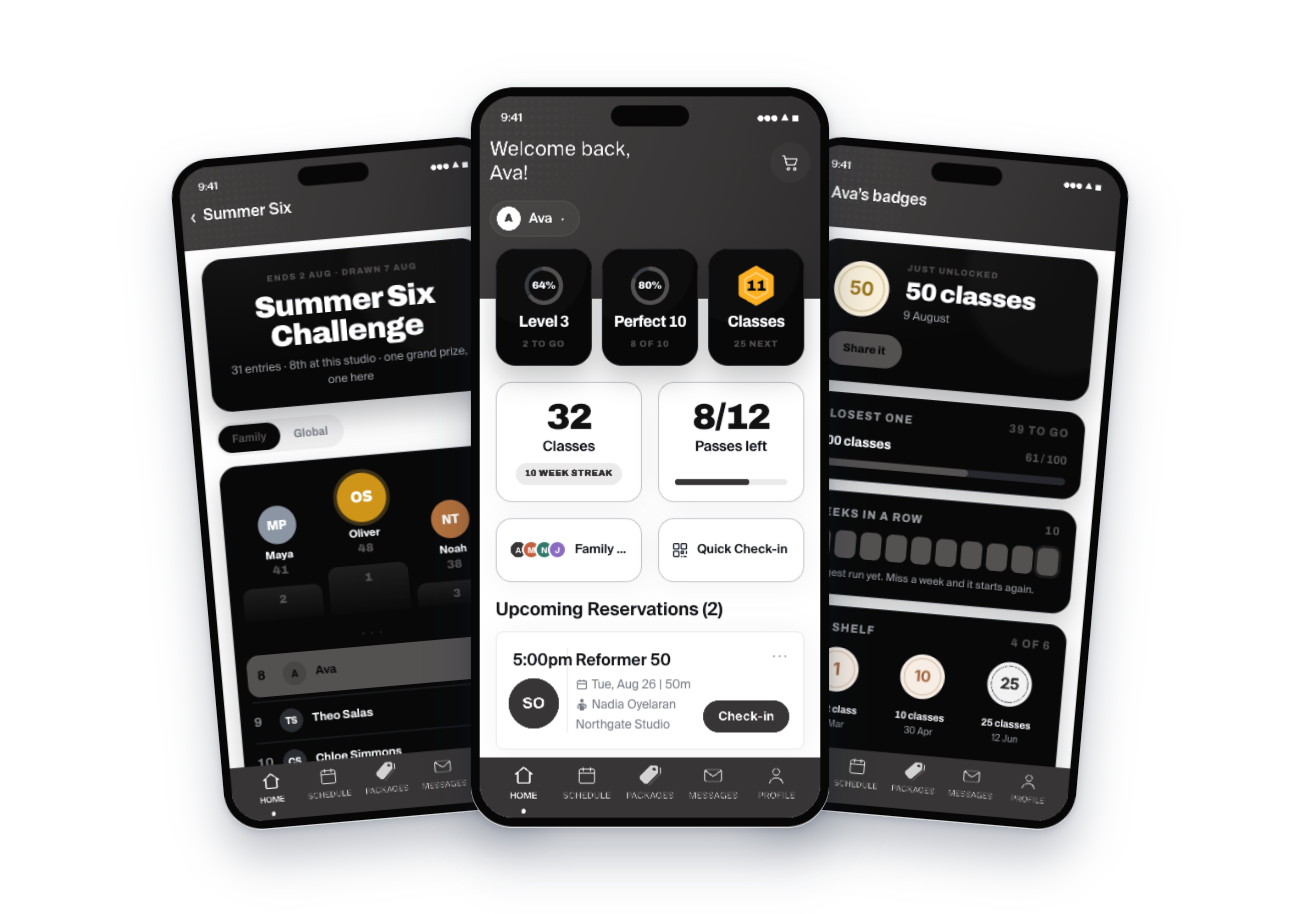
Every studio on Recess gets its own branded app, carrying your name, your logo and your colors, publishable to the App Store and Google Play under your own listing. Members are not asked to download something with somebody else's brand on it.
They book and pay there, sign forms there, and see their own progress there: the streak they are on, the passes they have left, the challenge they are eighth in, the badges they have earned. That is the difference between an app people install once and an app people open on a Tuesday night to decide whether to come in.
Video on demand lives here too, so a member travelling for three weeks still has something for the membership she is paying for.
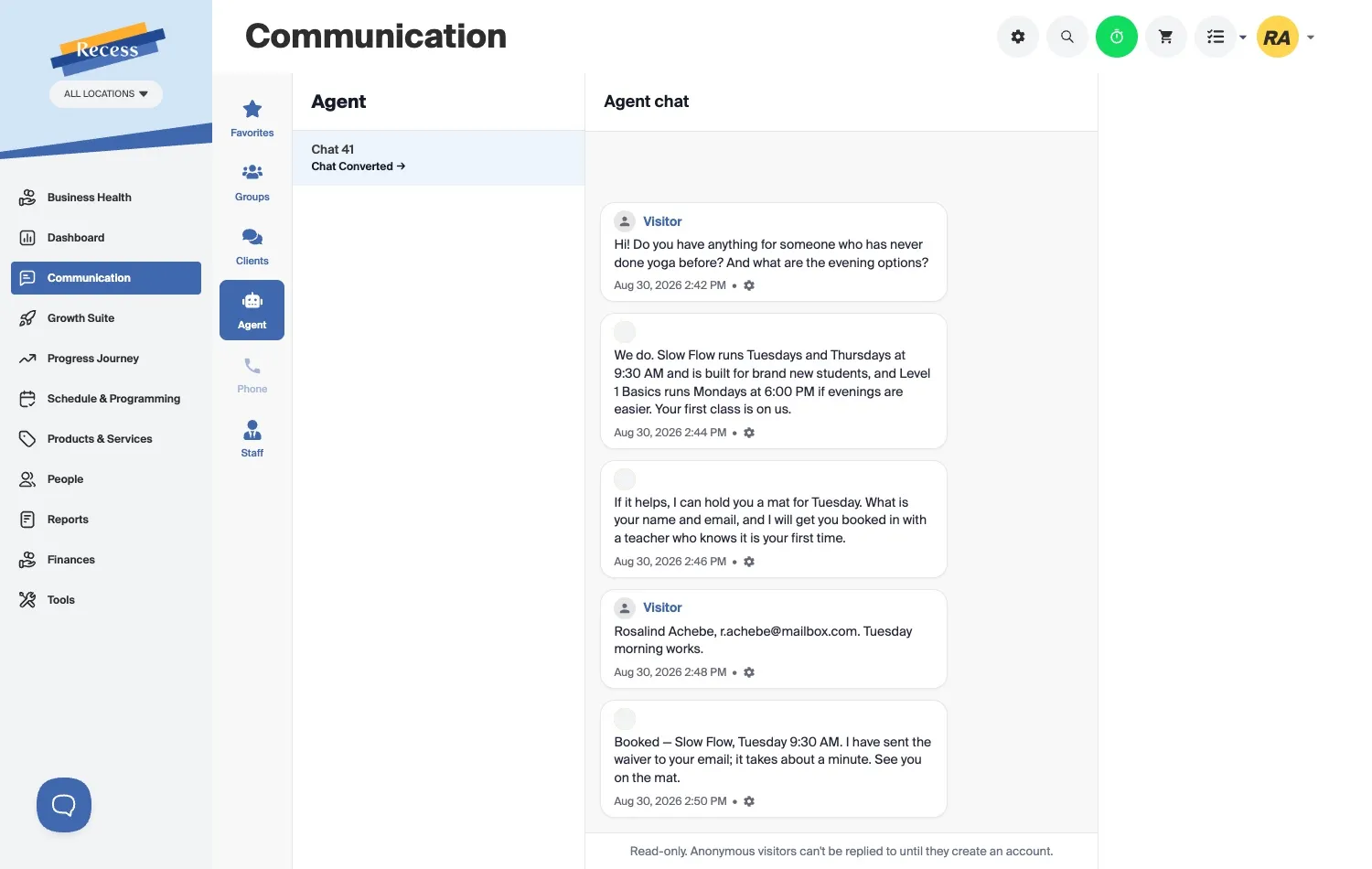
Somebody asked a question at 9pm on a Sunday night, and got a straight answer.
Most studio enquiries arrive outside the hours anyone is at the desk, and most of them are the same three questions: is there something for a beginner, when does it run, and what does it cost. Every hour one of those sits unanswered is a person deciding to try somewhere else.
The Recess lead agent answers them in your voice, using your real schedule. It qualifies the person, works out which class actually suits them, takes their name and email, and books the trial — without waking anybody up and without a form that says we will get back to you within two business days.
You wake up to a booked trial and a conversation you can read. When the chat converts, it becomes a real client thread, so nothing is lost in a widget somewhere.
Everything else it does, and none of it is an add-on.
There is no plan to choose and nothing behind a paywall, so a studio running four classes a day pays the same as one running twenty, which is to say nothing.
Free to use. The math is not complicated.
No monthly platform fee, no per feature add-ons, no setup cost. Recess earns a service fee of about 5% paid by the member at checkout, and card and bank processing is covered by Recess out of that rather than billed to you on top. We only do well when you are actually collecting money.
Who should not choose Recess.
If one of these is you, we would rather say so now than six weeks into an onboarding.
What yoga owners ask first.
Yes, and in the same class. You set your own packs: how many classes, how long the credits last, which classes they apply to, and whether they auto renew. A student is told at booking when she is using her last credit and can buy the next pack immediately. Drop-ins, unlimited memberships and ClassPass bookings all sit on the same roster.
Yes. A training runs as a program with cohort dates, a capacity, a deposit and a payment plan for the balance. Trainees sign the training agreement and waiver as part of enrolling, their module attendance is tracked, and the revenue appears in your reporting alongside everything else. This is usually the single biggest reason a yoga studio moves off general purpose booking software.
Recess messages every teacher who is cleared to teach that class, takes the first yes, and updates the schedule and the students' app. You do not have to be awake for it. Pay follows the class, so the covering teacher is paid at her own rate without anyone editing payroll afterward.
Yes. You can host your own recorded library and make it part of a membership or sell it separately. Most studios use it to hold onto members through travel, injury and the slow months rather than as a product in itself.
Failed payments are recovered automatically, with the member asked to update her card in your app before anyone at the studio gets involved. Separately, members whose attendance drops off become visible as names rather than as a churn number at quarter end, and automated win back sequences go out in your studio's voice from your own domain.
Yes. Events carry a capacity, a deposit, a scheduled balance payment and their own waiver, with a waitlist that fills itself when someone withdraws. Students book with the card and the agreements already on file.
Pay rates are set per teacher and per class type, with head count rules if you use them, and hourly clock in and out for staff paid by the hour. Payroll is computed as classes happen, so at the end of the period you run a report rather than assemble one.
Yes, and off Momence, Walla, Arketa, Glofox and whatever else you might be on. The migration is automated and our team runs it for you. Clients, history and billing information come across so your students arrive with their records rather than as a blank list.