Nobody sat at a desk today, and four trainers' calendars still came out right.
A day in a one room studio, and the parts of it nobody had to be there for.
100% free to use, no hidden fees. Members pay about 5% at checkout.
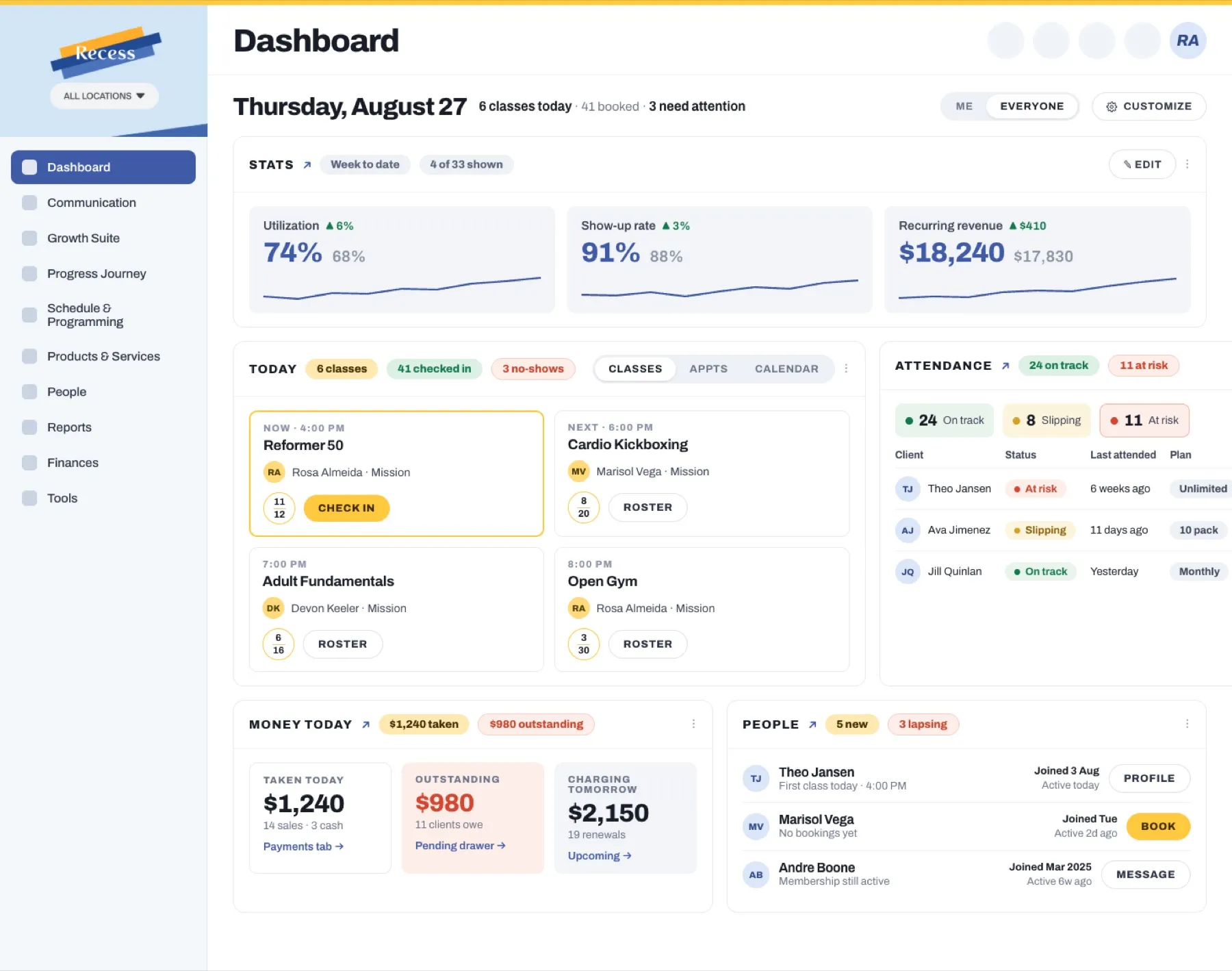
A late cancel forty minutes out, and no waitlist to hand the hour to.
The 8am texts to say she cannot make it. Forty minutes is not enough notice and you both know it. This is where an appointment studio is not a class studio: there is nobody to promote off a waitlist and no seat to release. One trainer is going to stand in an empty room for an hour, and the only question left is what it does to her package.
Recess enforces the policy you set rather than a default somebody else chose. If a late cancel costs a session, the session comes off her package. If it does not, it stays. If you would rather hand her a make up credit, that is a credit on her record with an expiry on it, not a note in your phone you will not find in three weeks. Packages, bundles and payment plans all draw down the same way, so you can see how many sessions a client has left and what she used them on.
What you stop doing is the arithmetic, and the argument in month four about whether she has four sessions left or six.
Semi private is neither an appointment nor a class, and most software makes you pick.
Three people train together at nine. Two of them are on a small group membership. The third bought a five pack. Forced into the appointment shape that is three bookings you square up by hand. Forced into the class shape it cannot price per head.
Recess treats a semi private slot as its own thing: a trainer, a capacity, a price per head, and the people who are actually in it. All three book the same slot and all three pay the way they agreed to pay, and none of it needs somebody at a desk to reconcile.
The same holds for a couple training on one account, or a parent and a teenager who share a payer. Family accounts hold one card and several members, each with their own profile, their own appointments and their own packages.
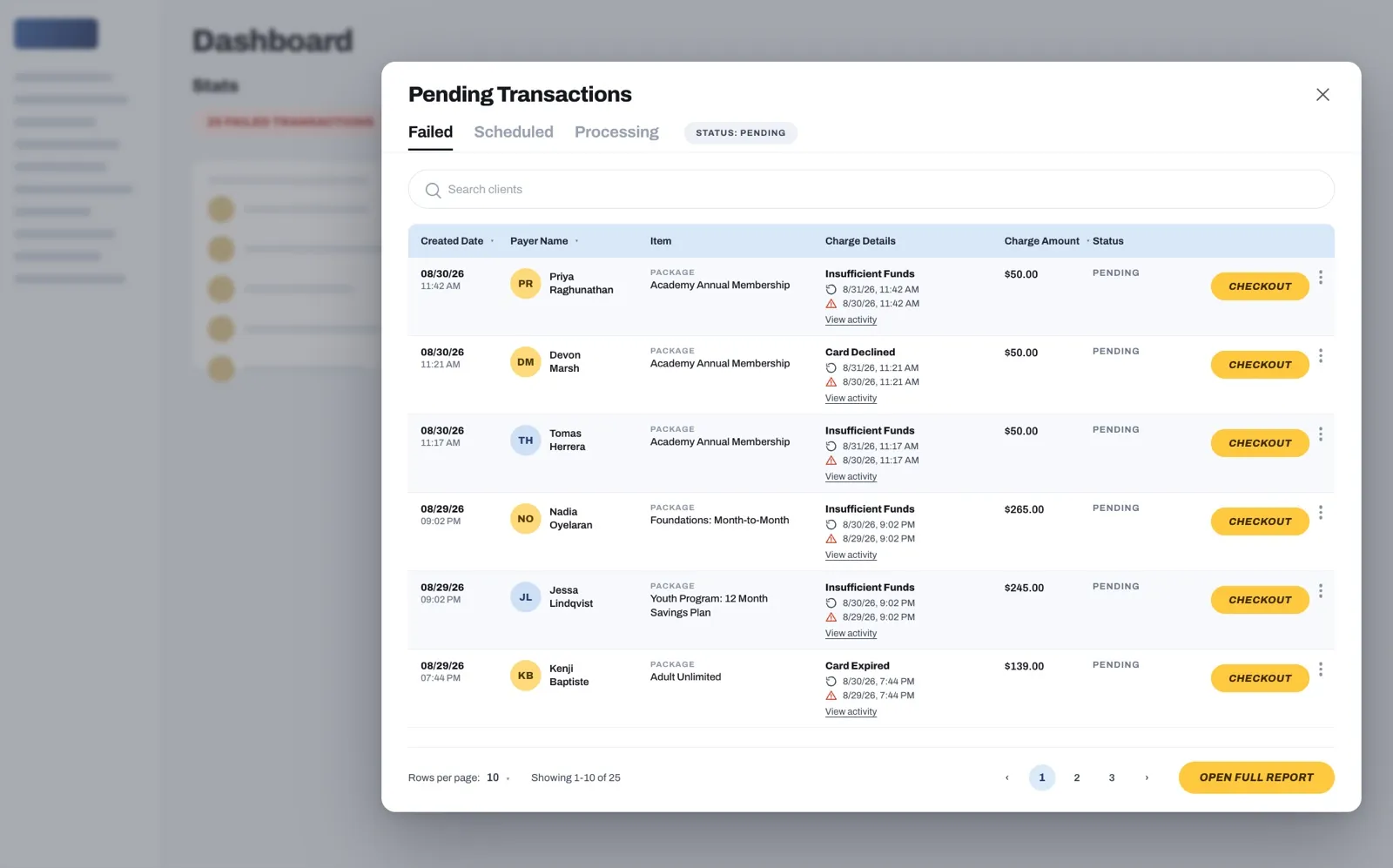
Her twentieth session of twenty, and the next twenty buy themselves.
She has been coming twice a week since February and she is not going anywhere. At half past one the package empties, which in most studios is the moment somebody has to remember to sell her another one.
Recess handles the renewal the way you set it up: an automatic rebuy on the card already on file, a prompt to her in your app, or a task for you. If the card fails, failed payment recovery goes to work on its own, retrying, messaging her and collecting a new card without you making the phone call nobody wants to make.
A share of the clients you think quit did not quit. Their card expired and nobody followed up. She also buys a resistance band set on the way out, through the same checkout, on the same card, into the same reporting.
A trainer loses his Tuesday evenings, and every client sees it within the minute.
He has a class at the community college now and cannot do Tuesdays past five. He changes his availability in the app at two minutes past four. He does not tell you, because he does not need to.
Every bookable slot after five on a Tuesday leaves what clients can see, immediately, without you being the messenger. Trainers hold their own availability and their own appointment types, so a client only ever sees a real opening, including the recurring slot she keeps week after week.
The double booked 5:30 that ends with two people standing in a one room studio does not happen, because the slot was never offered twice.
At twenty to ten the last client lets herself in, and the pay run has already added the day up.
She trains late because she works late. She arrives at 9:40, holds her phone to the reader, and the door opens because her membership is current and her waiver is signed. Nobody is there. Nobody needs to be. Recess connects to Kisi, so access follows the member record rather than a keypad code that leaked eight months ago and never changed.
While she is training, the day adds itself up. Every session that happened is attached to the trainer who ran it and priced at that trainer's rate. Rates differ by trainer, by session type and by head count, so a semi private of four does not pay the same as a one to one, and your senior trainer does not get paid your new trainer's number because somebody copied the wrong row.
Trainers can clock in and out. Payroll is a run you open and approve, not a spreadsheet you build on a Sunday night, and anything Recess could not match to a rate is flagged before you approve rather than found after you have paid. Today's charges, today's failed payments and today's retail sit in the same place, and Business Health connects QuickBooks so revenue, costs, payroll and a forward forecast are one view you can ask questions of in plain language.

One tap to keep the same slot next week, under your own name.
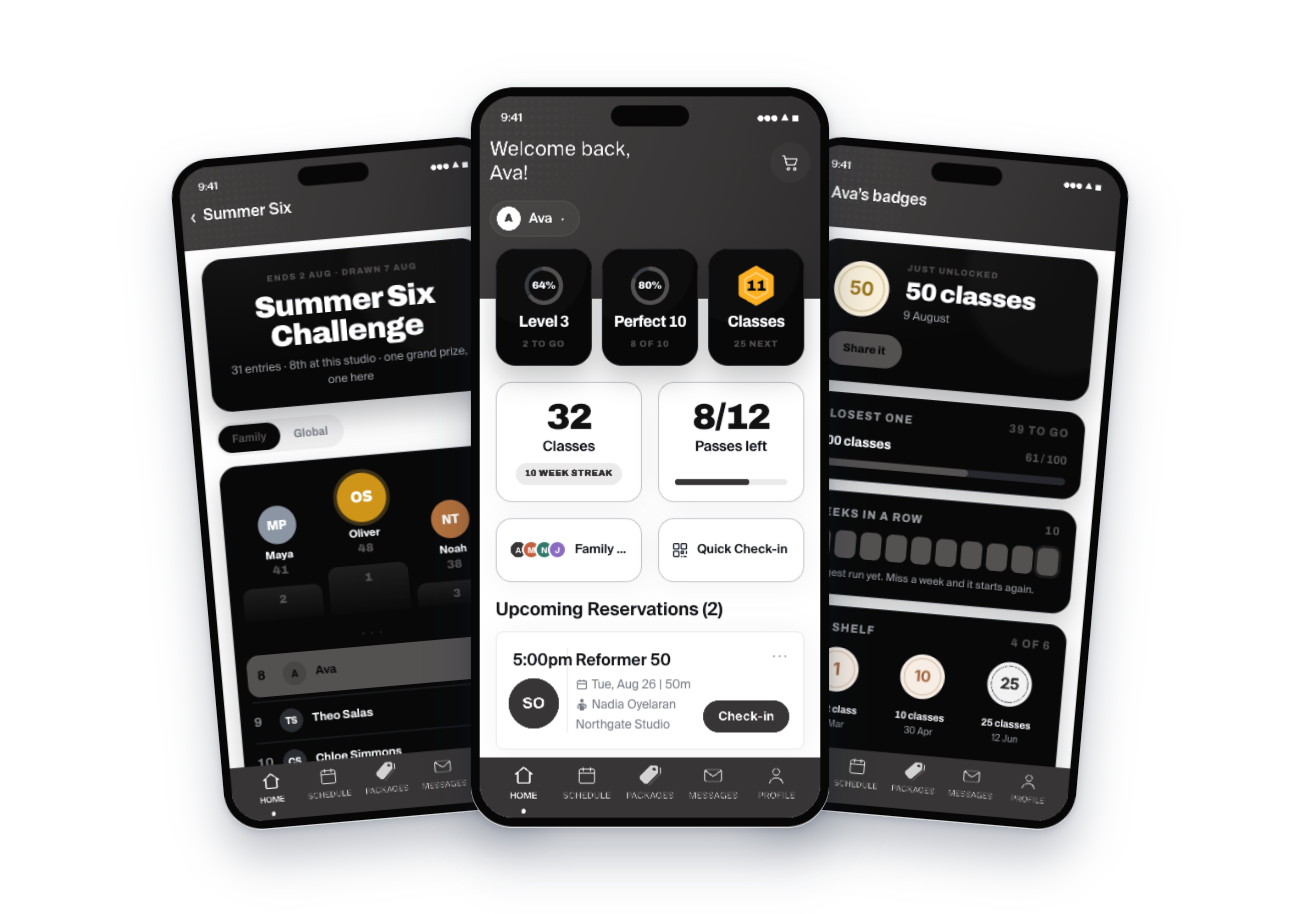
Your studio gets its own app carrying your name, your logo and your colors, publishable to the Apple App Store and Google Play under your own listing. Nobody is asked to download another company's app to book an hour with you.
She books her trainer there, pays, signs forms and sees how many sessions are left on her package without asking anyone. The standing Tuesday at six is two taps, and the client who needs to move it moves it herself.
For a studio with no front desk, the app is the front desk. It is also where she sees a streak, a challenge or a milestone between sessions, which is a large part of why she books the next one.
At 11:15 a form comes in, and you are with a client until one.
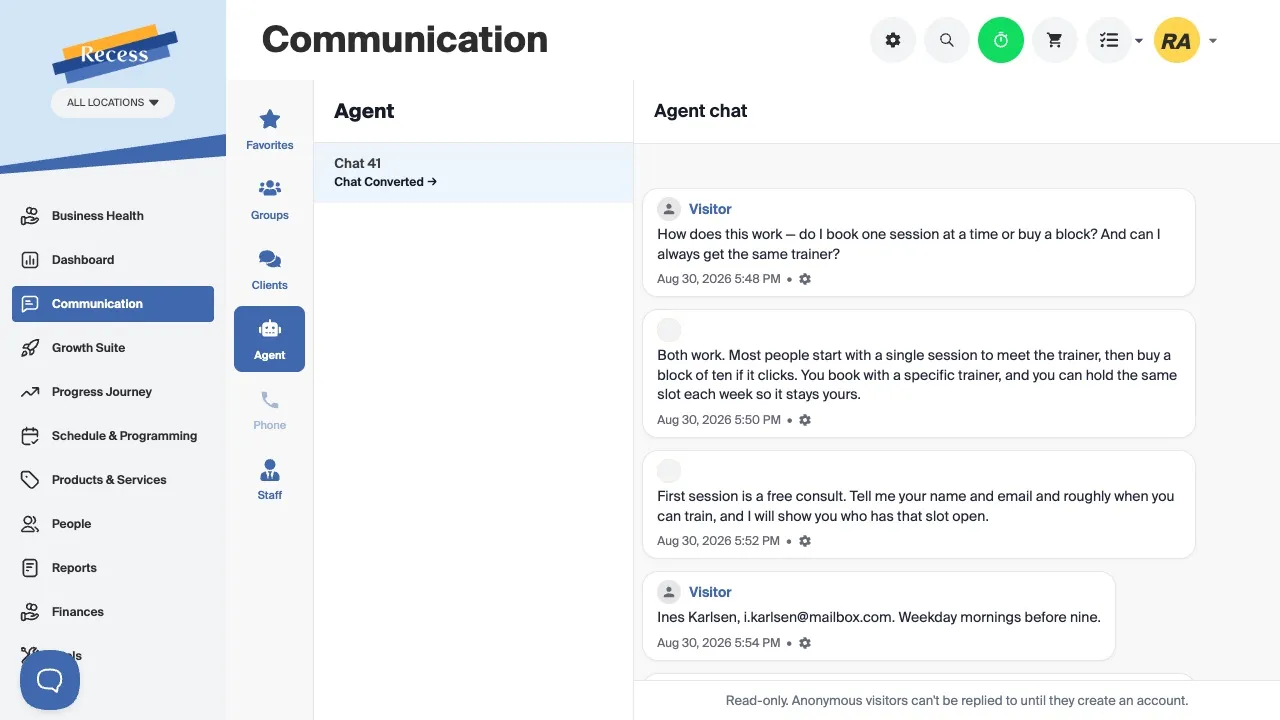
Somebody who has been thinking about it for a month fills in your form at a quarter past eleven. You are one to one in a room with the door shut and your phone face down. In most studios that lead waits two hours, which is roughly how long it takes for her to book with whoever answered first.
The Recess lead agent replies, answers what she actually asked, and offers her the consult times that are genuinely open in a trainer's calendar. She takes Thursday at 6:30pm. It is in the calendar, and your intake form and your waiver are waiting for her.
It works at a quarter past eleven on a Tuesday, and again at six the next morning while you are on the floor with your first client. This is the money an owner operator loses most of and notices least.
Everything a two trainer studio needs, and everything a twenty trainer one does.
There is no plan to choose and nothing sitting behind a paywall. The list below is the whole product, and it costs the same at either size, which is nothing.
No platform fee, at one trainer or at twenty.
No monthly platform fee, no per feature add ons, no setup cost. Recess earns a service fee of approximately 5% paid by the member at checkout, and card and bank processing is covered by Recess out of that rather than billed to you on top. That is the entire pricing model, and we only do well when you are actually collecting money.
Three reasons not to move to Recess.
If one of these is you, we would rather say so now than six weeks into an onboarding.
What personal training owners want to know.
Yes. Trainers hold their own availability and their own appointment types. Clients only see slots that are genuinely open, so the same time cannot be booked twice, and a change to a trainer's availability updates what clients can book immediately.
A client buys a package, bundle or payment plan, and sessions draw down as they are used. You can see how many are left at any time. When a package runs out you can rebuy automatically on the card on file, and if that card fails, failed payment recovery retries and collects a new one without you chasing it.
You set the policy and Recess applies it. A late cancel can consume a session from the package, leave it untouched, or convert into a make up credit with an expiry on the client's record. Custom fees are available if you charge for one.
Yes. A semi private slot has a trainer, a capacity and a price per head, and the people in it can be paying in different ways. Group classes, private sessions and appointments all sit on the same schedule.
Pay rates can vary by trainer, by session type and by head count. Sessions attach to the trainer who ran them and price themselves accordingly. Trainers can clock in and out, and payroll reporting adds it up rather than you exporting it.
Recess connects to Kisi. Your members open the door with their phone, and their permission comes from their record in Recess rather than a separate list you maintain. Current membership and signed agreements are what open the door. Cancel a membership and access ends with it.
Yes, and it is the main reason small studios move. You set which membership tiers get access and during which hours, so you can sell 24 hour access, early mornings, or open gym between appointments without paying someone to sit there.
Nothing in platform fees. No monthly cost, no setup cost, no charge per feature. Recess earns a service fee of approximately 5% that the member pays at checkout, and payment processing is covered by Recess out of that rather than billed to you on top.