Everything the gym handled today while you were holding pads.
One day across a class schedule, two coaches' pad hours and an open gym floor, and the part of it nobody had to stop and do.
100% free to use, no hidden fees. Members pay about 5% at checkout.
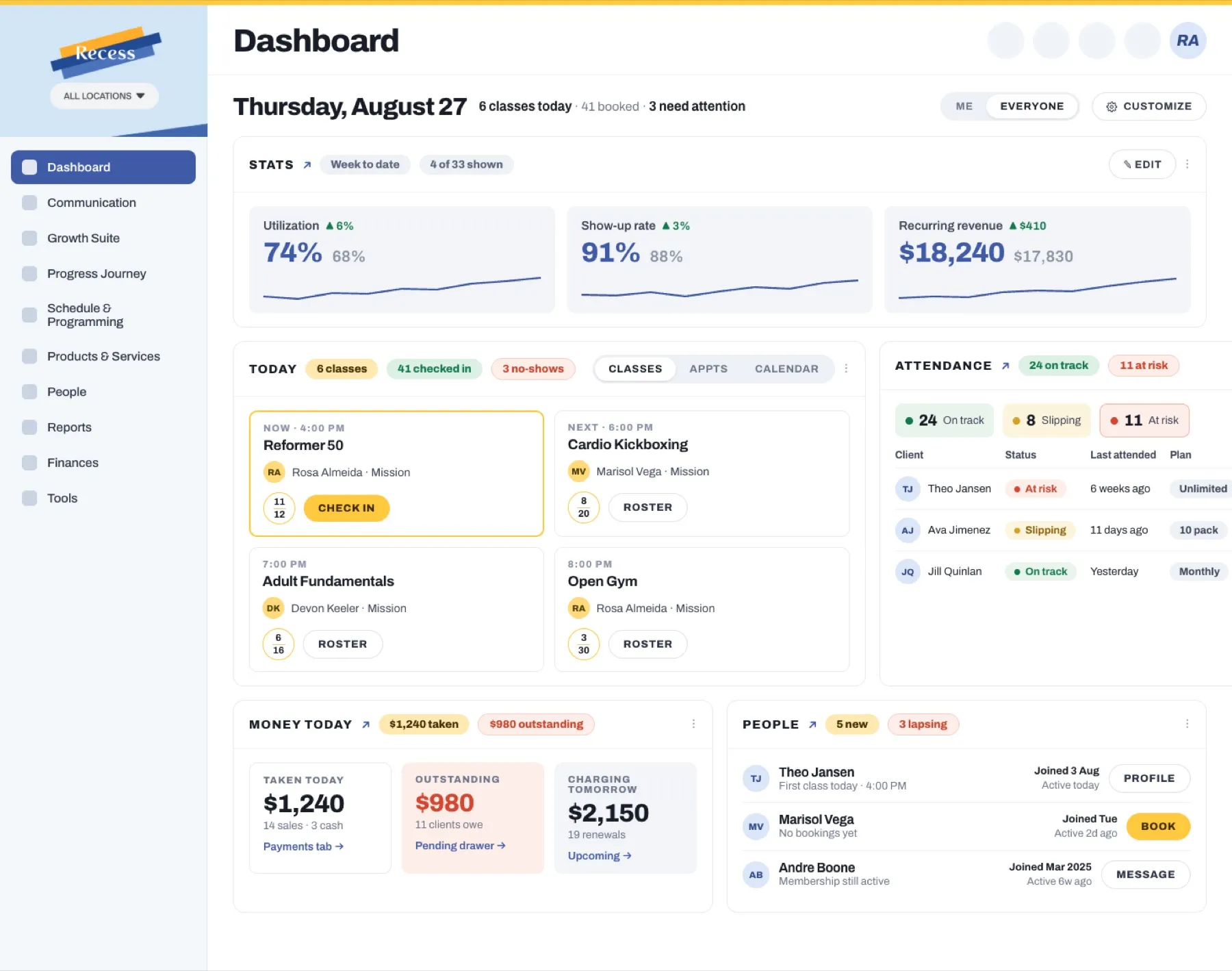
The floor is busy and nobody is at the front desk yet.
Open gym is the part of a boxing gym that most software pretends is not happening. No roster, no start time, nobody taking a register. And yet at ten past six there are eleven people on the bags, two skipping, and the ring is being shared.
In Recess open gym is a bookable window with its own access rules, sitting on the same schedule as the 6:15 conditioning class rather than in a separate world. Kisi door access lets in the people whose membership covers that hour. Check in happens at the kiosk, from a barcode, or from a phone with geo based check in that only counts if they are actually at the gym.
So you know who was on the floor at ten past six without having been there. An open gym membership and a class membership are not the same thing, and the difference gets enforced at the door instead of argued about at the counter three weeks later.
A walk in signs your waiver before he puts a glove on.
Somebody's coworker decided last night that he wants to try boxing. He has never been here, nobody at the counter knows him, and the counter is not staffed until eight.
He scans the code at the door, gives his details, and signs your waiver on his phone. Your waiver, with your own language about contact, sparring and assumption of risk, dated and attached to his profile as a record you can produce a year from now. Then, and only then, the kiosk turns green for him.
This is the paragraph a boxing owner should read twice. A waiver here is not paperwork, it is the thing standing between you and a genuinely bad afternoon, and clipboard waivers fail in the ways clipboards fail. The page goes in a drawer, the drawer gets moved, the signature is from 2019 and the policy has changed twice since, and the one person you actually needed a signature from came in on a busy Saturday when nobody was watching the door.
Recess holds waivers, membership agreements, program agreements and any custom form you use, signed digitally at sign up and kept on the client's record with a date, so you can see at a glance who has not signed the current version. One honest warning, because it bites people: be deliberate about which agreements you mark as required. A required agreement that has not been signed blocks that member at check in, and they find out at the door with a line behind them. Make the waiver required. Think harder about the rest.
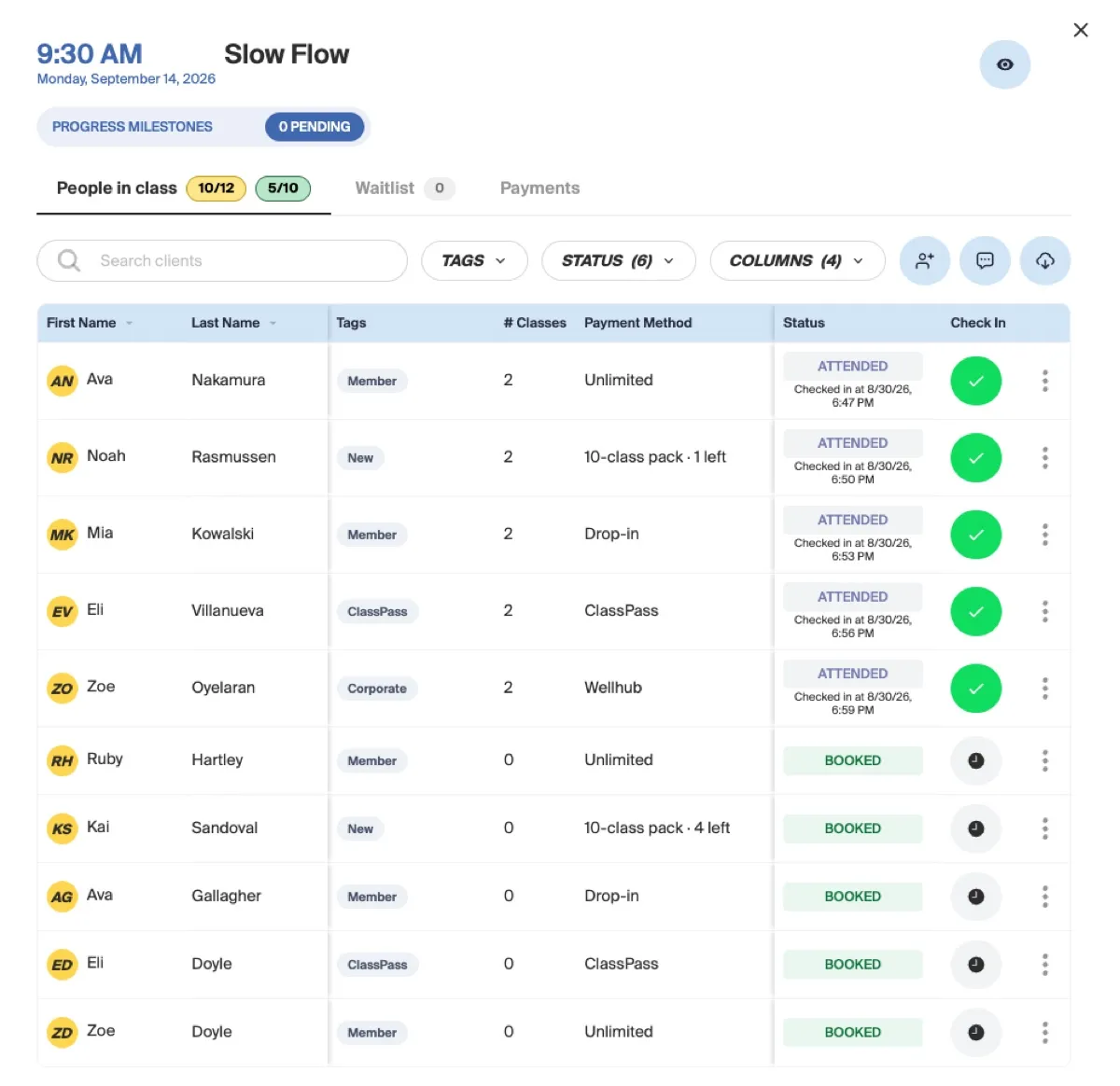
Your head coach sells an hour of pads for eleven o'clock.
Private and semi private coaching lives on the same schedule as your classes, not in a separate calendar app that only the coach can see. Each coach holds his own availability and his own session types, so a client only ever sees hours that coach is genuinely free for, and the same hour cannot be sold twice.
Semi private sessions carry a cap and a price per head, which is how most gyms actually sell them: two or three people splitting a coach and the cost of him. Pads, technique, a fight camp block, whatever you call them, they are session types you define once and he then owns the calendar for.
It matters because pad work is the highest margin hour in the building and the easiest one to lose. An hour that can only be booked by texting a coach is an hour that gets booked when the coach remembers to reply.
He has been in twice, and Tuesday sparring never appears on his phone.
Tuesday sparring asks for a level, a coach's sign off on the basics, and the membership tier that covers contact work. He holds none of the three, so the class was never bookable for him, and the app told him plainly what it takes to get in. That is a better answer than silence, and it doubles as a pitch for the technique hours he can book instead.
In a boxing gym this is a safety problem before it is an admin one. The version without a gate is a coach noticing at the ring apron that a two week novice is gloved up across from someone with fifteen fights, and having to pull him out in front of the whole room. Nobody enjoys doing that, and some coaches will not do it, which is exactly how people get hurt.
You gate a class on whatever actually matters to you: a level, a skill a coach has signed off, a prerequisite class or course completed, an age, a tag you keep on the client, or the membership or program they hold. Stack two if your room needs it. Set it once on the class and it holds for everyone, including the four year regular who assumes it does not apply to him.
Gloves, wraps and a membership go through one till.
He finishes his third trial class, decides he is in, and wants gloves. Point of sale is part of the gym rather than a bolt on, so the sixteen ounce gloves, two pairs of wraps and a mouthguard go on the same transaction as the membership and its contract term, on the same card, into the same reporting.
Your counter and your membership revenue are not in two systems you reconcile at the end of the month. Retail products, gift cards, discounts and custom fees all run through that one checkout, so the busiest hour of the evening does not become an hour of data entry the following morning.
Memberships, contracts, packages and payment plans live here as well. Six months at a lower rate is a contract. Ten classes to use over the winter is a package that draws down as he uses it. And when his card expires in March, failed payment recovery retries and collects a new one without anybody having to make the phone call nobody wants to make.
Coach pay for the day is built, and nothing is paid until you approve it.
Six group classes, four hours on the pads and an open gym shift. Three coaches on three different arrangements: one flat per class, one on a rate that steps up above twelve heads, one clocked in on a shift for the unstaffed hours.
Recess already knows who taught what and how many people were in the room, because that came off the roster and the door rather than off a sheet somebody filled in on the way out. Pay rates are set per coach by class type or by head count, coaches clock in and out if you run shifts, and payroll reporting comes off the same data that ran the schedule.
Nobody sat down on Sunday with a calendar and a calculator. The pad hours and the classes come off the schedule itself rather than somebody's reconstruction of it from memory. The run also tells you what it could not match to a rate, and nothing is locked in until you approve it.

Your name on the app, and everything they need before they train.
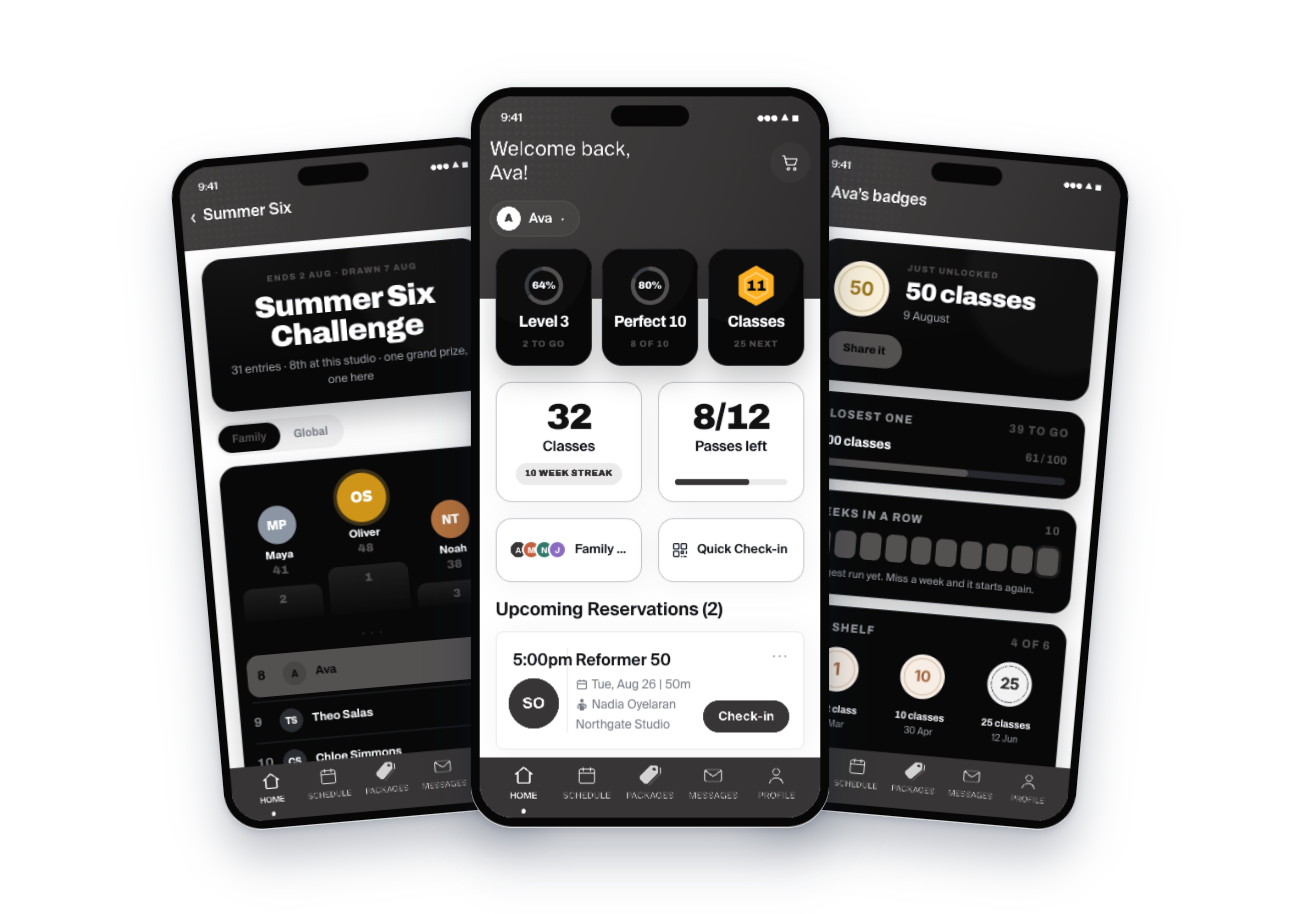
Your gym gets its own branded app carrying your name, your logo and your colors, publishable to the Apple App Store and Google Play under your own listing. Nobody is asked to download a software company's app in order to book a class at your gym.
They book classes and pad hours there, pay, join waitlists, sign your waiver and anything else you require, and see where they stand in your levels: the skills a coach has signed off, the level they are working toward, and whether they are cleared for Tuesday.
That last part does more work than it looks like it does. A member who can see the three things standing between him and sparring has a reason to book the technique class, and he does not have to ask a coach for the list in front of the room.
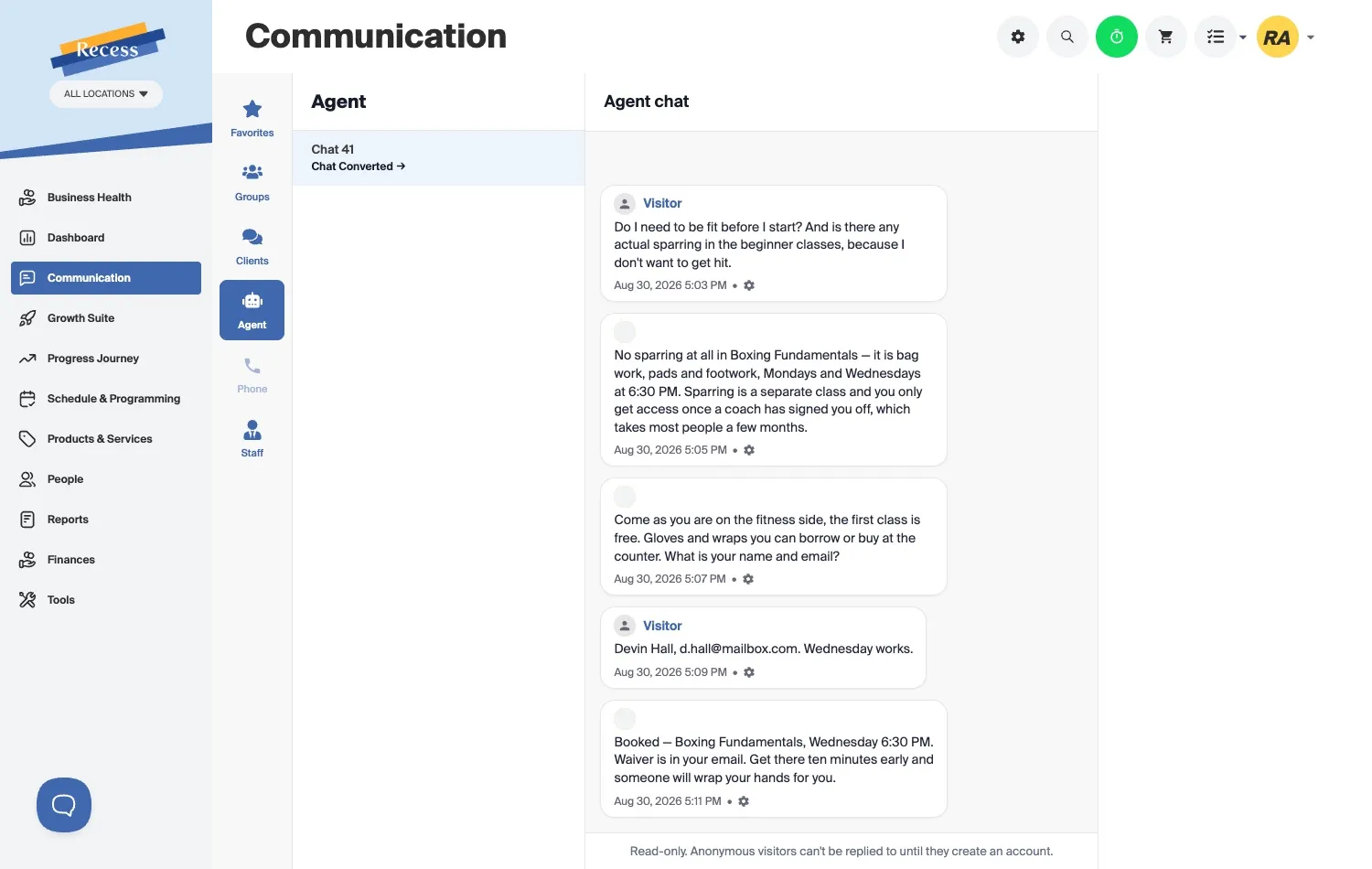
He asks whether he has to spar, and does not have to wait until morning.
The message lands in the early evening, while the 6:30 is warming up and the counter is busy. It is the same two questions this gym always gets: do I need to be fit before I start, and is there any actual sparring in the beginner class.
The Recess lead agent answers both off your real schedule. There is no sparring in Boxing Fundamentals, it is bag work, pads and footwork on Mondays and Wednesdays at 6:30. Sparring is a separate class, and you only get into it once a coach has signed you off, which takes most people a few months. Come as you are on the fitness side, the first class is free, and gloves and wraps can be borrowed or bought at the counter.
Then it takes his name and email and books him into Wednesday's Boxing Fundamentals, with the waiver sent to his inbox and a line telling him to get there ten minutes early so somebody can wrap his hands. Leads in boxing go cold in hours, and nobody on your staff had to be free for this one.
The rest of the gym, and nothing held back for a bigger plan.
There is no plan to choose and nothing behind a paywall, so a one room gym runs on exactly the same system as a three location one and pays the same for it, which is nothing.
Nothing to the gym. Here is where the money comes from.
No monthly platform fee, no per feature add ons, no setup cost. Recess earns a service fee of approximately 5% paid by the member at checkout, and card and bank processing is covered by Recess out of that rather than billed to you on top. We only do well when you are actually collecting money.
Where we would tell you to look elsewhere.
If one of these is you, we would rather say so now than six weeks into an onboarding.
What boxing gym owners ask before they move.
Yes, and that is the point. Group classes, private and semi private coaching on each coach's own availability, and open gym windows all sit in the same schedule and the same client records. Coaches only show hours they are genuinely free for, so the same hour cannot be sold twice.
Members sign your waiver digitally at sign up, on their phone, and it is stored on their profile with a date. You can see at a glance who has not signed the current version. If you mark an agreement as required, an unsigned member is blocked at check in, so set the required ones deliberately.
You do, and Recess enforces it. A sparring class can require a level, a skill a coach has signed off, a prerequisite class or course completed, an age, a tag you keep on the client's record, or the membership tier that covers contact work. Anyone without them never sees the class as bookable, and the app lists what they still need rather than leaving them to ask a coach at the ring apron.
Yes. They can sign up, sign the waiver and pay from their phone at the door, then check in at the kiosk. Nothing needs a staff member to let them in, which matters most on a busy evening when nobody is watching the front.
Classes cap per class and per room, so twenty four bags means twenty four spots and no more. Past that, people join a waitlist, and when someone drops the next person gets the spot and is told, without a staff member noticing and doing it by hand.
Yes. Point of sale, retail products and gift cards run through the same checkout as memberships, so a new member and their first pair of gloves are one transaction and one line of reporting rather than two systems.
You can sell open ended subscriptions, fixed term contracts, class packages that draw down, and payment plans. Failed payments retry and recover on their own, which is the cause of more quiet cancellations than most owners expect.
Yes. A family account has one payer and several members, each with their own profile, membership and attendance. Sibling discounts apply automatically and recalculate when a child pauses or leaves.
Nothing in platform fees. No monthly cost, no setup cost, no per feature charge. Recess earns a service fee of approximately 5% that the member pays at checkout, and payment processing is covered by Recess out of that rather than billed to you on top.